The $5,000 rule is a quick way to decide whether to repair or replace your AC: multiply the system’s age in years by the repair cost, and if the result is over $5,000, replacement usually makes more sense. A 12-year-old unit facing a $500 repair lands at $6,000 — leaning toward replace. It’s a helpful gut check, not the whole story. Your AC’s age, efficiency, refrigerant type, and how often it’s breaking down all matter too. In Durham’s long cooling season, a right-sized, efficient replacement often pays back faster than homeowners expect.
Few home decisions feel murkier than staring at a repair quote and wondering whether you’re throwing good money after bad. Replace too soon and you’ve spent thousands you didn’t need to; repair too long and you’re nickel-and-diming a system that’s on its way out. The $5,000 rule gives you a fast starting point — and this guide walks through how to use it, where it falls short, and how the math actually plays out for a Durham home.
What Is the $5,000 Rule?
The $5,000 rule is a simple formula many homeowners and technicians use as a first gut check:
Age of the system (years) × cost of the repair = your number.
If that number is over $5,000, replacement is usually the smarter spend. If it’s well under, a repair is often worth it. A few quick examples:
- A 6-year-old system with a $400 repair = 2,400 → repair.
- A 10-year-old system with a $600 repair = 6,000 → lean toward replace.
- A 15-year-old system with a $500 repair = 7,500 → replace.
The logic is sound: the older a system is, the less life a repair buys you, so the same repair cost is worth less on an old unit than a new one.
The $5,000 Rule Chart: Repair or Replace?
Here’s the rule at a glance. Find your system’s age across the top ranges and your repair estimate down the side.
| Repair cost System age | Under 8 yrs | 8–12 yrs | Over 12 yrs |
|---|---|---|---|
| Under $300 | Repair | Repair | Repair / weigh it |
| $300 – $700 | Repair | Weigh it | Lean replace |
| $700 – $1,500 | Repair | Lean replace | Replace |
| Over $1,500 | Weigh it | Replace | Replace |
Where the $5,000 Rule Falls Short
The rule is a starting point, not a law. It looks only at age and repair cost, and ignores several things that can swing the decision hard. A 9-year-old system that’s been reliable and efficient is a very different case from a 9-year-old system that’s on its third repair this summer and uses obsolete refrigerant — even if the formula spits out the same number. Use the rule to frame the decision, then weigh the real factors below.
The Real Factors in a Repair-or-Replace Decision
Age and expected lifespan
Most central AC systems last about 12 to 15 years with regular maintenance. If yours is in that window or beyond, every repair is a bet on a system that’s already near the end. Under about 8 years, a system usually has plenty of life left and repairs make sense.
Energy efficiency
Air conditioners have gotten dramatically more efficient. An older, low-SEER unit can use far more electricity than a modern one to cool the same house. If your system is aging and your bills keep climbing, some of a replacement’s cost comes back to you in lower monthly bills — and that payback is bigger in a climate where the AC runs for many months. An older unit might be rated at 10 SEER while a modern system is 15 or higher, which can mean noticeably less electricity for the same cooling. Over Durham’s long season, that gap shows up on every summer bill.
Refrigerant type (the R-22 problem)
Systems old enough to use R-22 refrigerant are expensive to repair, because R-22 has been phased out and what’s left is costly and scarce. A refrigerant-related repair on an R-22 system is often the moment replacement clearly wins, since you’d be pouring money into a system that’s obsolete by design.
Repair frequency
One repair on an otherwise solid system is normal. A pattern of repairs — a capacitor last year, a motor this year, a leak now — is the system telling you it’s wearing out. When the calls start stacking up, the cumulative cost often exceeds a replacement, and you’re buying stress along with the parts.
How long you plan to stay
If you’re moving in a year or two, a targeted repair may be the sensible choice and let the next owner make the call. If this is your long-term home, investing in a correctly sized, efficient system you’ll enjoy for 15 years is easier to justify.
Warranty status
If your system is still under a manufacturer parts warranty, a repair may cost you only labor — which can tilt the math toward repairing. Most warranties require documented annual maintenance, so it’s worth checking your records before deciding.
Why the Math Is Different in Durham
National rules of thumb don’t account for our climate, and here it genuinely changes the calculation. Durham’s cooling season is long and humid, which means two things. First, an efficient replacement runs for many months a year, so the energy savings add up faster than they would somewhere with a short summer — the payback on a higher-efficiency system is simply quicker here.
Second, our humidity rewards right-sizing. If your old system was oversized and left your house clammy, a replacement is a chance to correct that with a proper load calculation and, often, a variable-speed system that controls moisture far better. And there’s a timing factor: replacing on your own schedule in spring beats an emergency changeout in the middle of a July heat wave, when demand and stress are both at their peak.
When a Repair Is Still the Right Call
Plenty of the time, fixing it is the smart move. If your system is under about 8–10 years old, the repair is a single, modest part — a capacitor, a contactor, a thermostat — and it hasn’t been breaking down repeatedly, repairing is almost always cheaper and simpler than replacing. A newer system with a small fault has years of life left, and honest AC repair in Durham gets it running again quickly — you can see typical repair prices in our Durham AC repair cost guide.
When Replacement Wins
Replacement tends to make sense when several of these line up: the system is past 12–15 years, the repair is a major component like a compressor or coil, it uses obsolete R-22 refrigerant, it’s needed repeated repairs, or your energy bills keep climbing. When that’s the picture, honest AC installation in Durham starts with a real load calculation and written pricing — a right-sized system that runs efficiently and controls humidity, not just the biggest box on the truck.
What About Replacing Just the Outdoor Unit?
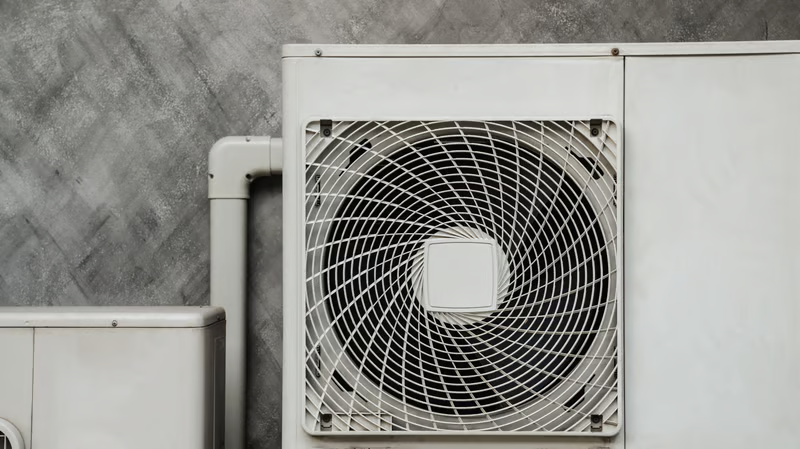
It’s tempting to save money by swapping only the outdoor condenser and leaving the indoor coil and air handler in place. Sometimes that’s reasonable — but it carries a real catch. The outdoor and indoor components are engineered to work as a matched set, so pairing a new, high-efficiency outdoor unit with an old indoor coil can leave you paying for efficiency you’ll never actually get, and it can even void the new unit’s warranty. It can also create refrigerant-compatibility problems if the old coil was built for R-22. A reputable installer will tell you honestly whether a partial replacement makes sense for your setup or whether you’d just be building a mismatched system that underperforms.
A Quick Repair-or-Replace Checklist
Run through these before you decide:
- How old is the system? (Under 8 leans repair; over 12 leans replace.)
- What does the age-times-repair math say against the $5,000 rule?
- Is this the first repair, or one of several recently?
- Does it still use obsolete R-22 refrigerant?
- Have your energy bills been steadily climbing?
- Is it still under a parts warranty?
- How long do you plan to stay in the home?
If most answers point to “old, inefficient, and repeat repairs,” replacement is likely the better spend. If they point to “newer, reliable, minor fix,” repair with confidence.
Should You Get a Second Opinion Before Replacing?
For a big replacement quote, a second opinion is smart — and any honest company will encourage it. Get more than one written estimate, make sure each is based on an actual load calculation rather than a square-footage guess, and be wary of high-pressure tactics or a technician who jumps straight to “you need a whole new system” without diagnosing the specific failure. A trustworthy shop will show you exactly what failed, explain the repair-versus-replace trade-off in plain terms, and put the numbers in writing so you can compare fairly. You’re making a decision that affects the next fifteen years of your comfort and bills — it’s worth an extra day to get it right.
Frequently Asked Questions
How many years should an AC last?
Most central air conditioners last about 12 to 15 years with regular maintenance, and some well-maintained systems reach 20. In a demanding climate like Durham’s, where the AC runs many months a year, staying on top of maintenance is what gets a system to the higher end of that range rather than failing early.
What is the average cost of replacing an AC unit?
Published estimates commonly put AC replacement in the range of about $3,900 to $8,000, depending on system size, efficiency, and your home’s ductwork — while repairs typically run from around $130 to $2,000. Those are national averages, not a quote, so the only way to know your real number is an in-home assessment and a written estimate.
Is it worth repairing a 20-year-old air conditioner?
Usually not for a major repair. A 20-year-old system is past its expected lifespan, less efficient than modern units, and may use refrigerant that’s expensive or discontinued. A small, cheap fix might get you through a season, but investing a compressor or coil cost into a unit that old rarely pays off compared with replacing it.
Is replacing an AC unit a repair or an improvement?
Replacing an entire AC system is generally considered a capital improvement to your home rather than a routine repair, since it adds value and has a long useful life, whereas fixing a part is a repair. This distinction can matter for home-value and tax-basis purposes, so it’s worth asking a tax professional about your specific situation.
How much is a new AC unit for a 2,000 sq ft home?
Square footage is only one factor — ductwork, efficiency rating, system type, and how well the home is sealed all move the price, so the wide ranges online rarely match a specific house. For a 2,000 sq ft Durham home, a proper load calculation and written estimate are the only reliable way to get a real number rather than a guess.
Not Sure Whether to Repair or Replace? Ask HVAC Durham NC
The $5,000 rule gets you started, but the right answer depends on your system, your home, and your plans — and you deserve an honest read, not a sales pitch. Our NATE- and EPA 608-certified team has guided Durham and Triangle homeowners through this decision since 2012. If a repair makes more sense, we’ll tell you; if replacement is the smarter spend, we’ll show you why in writing. Call HVAC Durham NC at +1 (984) 254-7914 for a straight answer.