
HVAC in Carrboro, NC
Talk to a person
(984) 230-5554
Carrboro, Orange County
Piedmont, North Carolina
1980s heat pumps, small lots
Repairs, replacements, maintenance
When a 1980s heat pump meets a January night
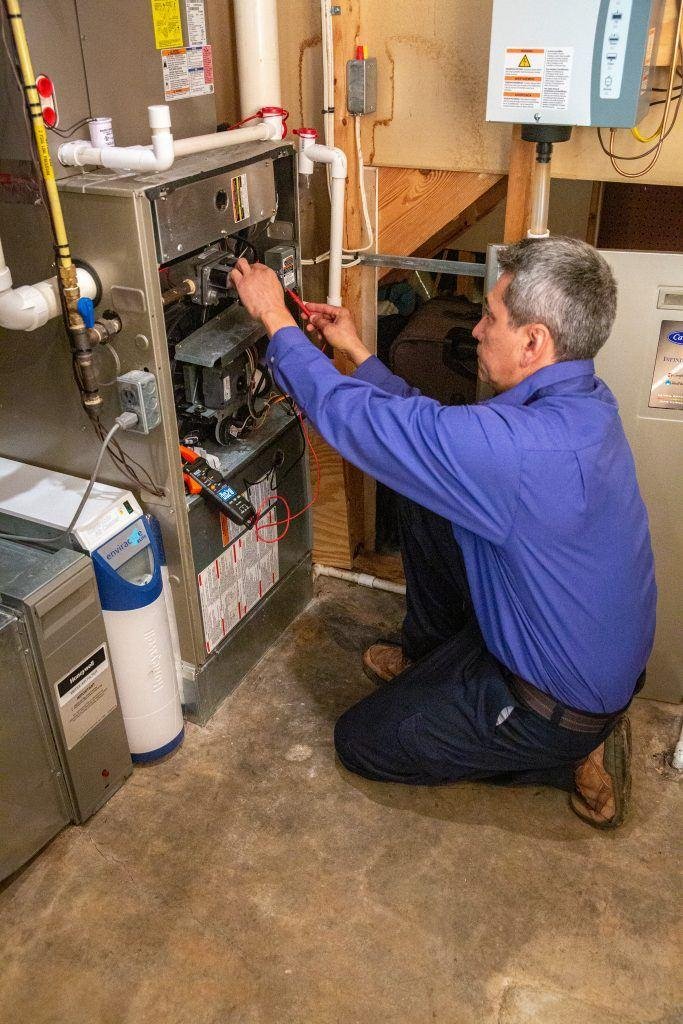
Carrboro built most of its housing in the 1980s, and it built it electric. That single fact explains a large share of the heating calls in town: a house finished in 1985 or 1988 is still running the heat pump it was built with in many cases, and that machine is now well past the service life the industry plans for. The complaint is rarely dramatic. It is a house that heats, but not to the number on the thermostat, and an outdoor unit that never gets a rest in January. Carrboro HVAC work starts by finding out how much of that is the equipment and how much is the house.
Homes in Carrboro: the local picture
Carrboro is small, dense and old by Triangle standards, with a housing stock that peaked in one decade and has been added to slowly since.
495 feet, and what the elevation does not change
The USGS 3D Elevation Program returns 494.5 feet at the point the Census Bureau uses to locate Carrboro, the highest of the towns on this side of the county. It is still Piedmont ground, and it is still nowhere near the height at which gas equipment changes: Rheem’s high-altitude instructions require a 4 percent derate per thousand feet only above 2,000 feet, with an orifice change where the gas heating value calls for one. Carrboro sits more than 1,500 feet below that line, so no furnace here is derated for altitude. The elevation is a fact about the ground, not a factor in the diagnosis; the age of the house and the state of the outdoor unit are what matter.
The 1980s built this town
The ACS 2019–2023 five-year estimates put Carrboro’s median year built at 1986, and the decade distribution is unusually concentrated: 43.6 percent of the housing went up in the 1980s and 1990s, with 27.4 percent in the 1980s alone. A further 33.5 percent predates 1980, and 22.9 percent was built in 2000 or later. The 1980s wave is the defining one. Those houses were built with the heat pump technology of the time, on lots that were already small, and many have changed hands several times without the heating system being replaced. A 1980s Carrboro house with its original outdoor unit is not unusual; it is the pattern, and it is why the town’s repair calls so often end in a conversation about replacement.
How Carrboro heats: electricity, with a gas minority
Of the 9,415 occupied homes in Carrboro, 5,739 — 61.0 percent — use electricity as their primary heating fuel, and 3,512 — 37.3 percent — use utility gas, per the ACS 2019–2023 five-year estimates. Electricity is a fuel category, not a heat pump, so the electric majority includes heat pumps, air handlers with heat strips and older resistance systems. Dual-fuel homes are counted once by primary fuel, and the figures lag the market by roughly two years. In practice, the town’s heating is dominated by machines that also do the cooling, which is why a Carrboro service call in October often prevents a July failure as much as a January one, and why the outdoor unit gets looked at in both seasons.
Who serves a Carrboro address
Carrboro is entirely within one county: the Census place-by-county geography returns the county of Orange for the whole town, with no split. That means a single building department reviews a mechanical permit and a single inspection schedule applies, which removes a boundary question that neighbouring Chapel Hill has to answer first, and it means the paperwork on a replacement is the same whether the house is off the main street or at the edge of town. Utility territory is a separate matter and one this page will not guess at: the gas or electric provider, and any rebate eligibility attached to it, depends on the address rather than the town line. The bill in your hand is the authority. If an incentive is part of the decision, check the provider named on it before choosing equipment.
Heating and cooling services in Carrboro
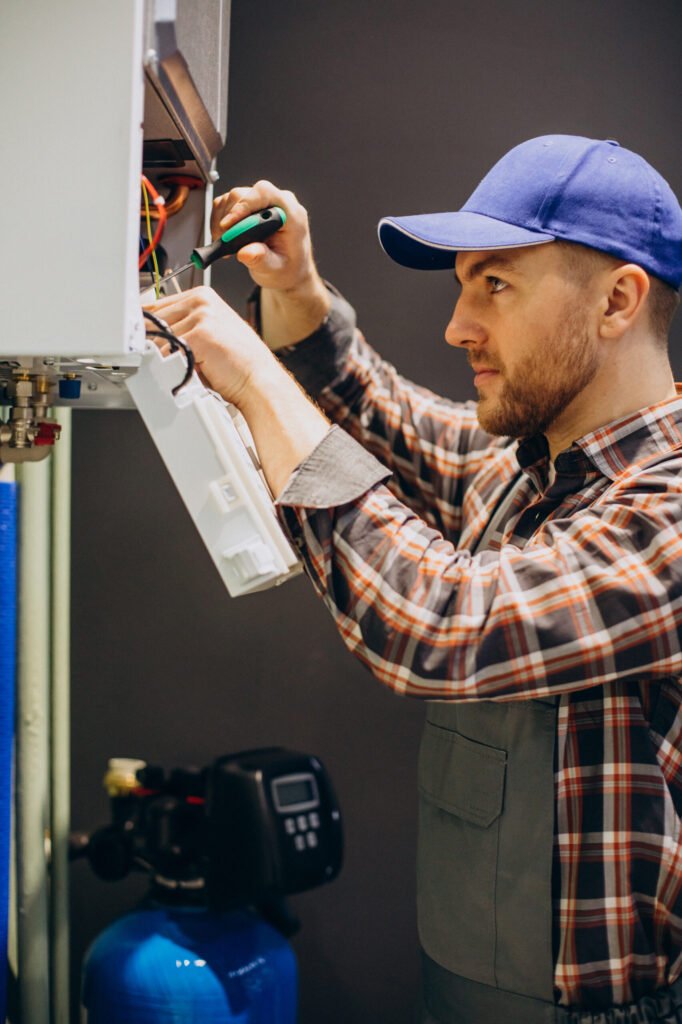
The work here follows the 1980s build wave. A heat pump from that era is a simpler machine than what is sold now, and its common failures are predictable: a reversing valve that no longer shifts, a defrost board that has drifted, a compressor that is drawing more current than it should, and a charge that has leaked slowly for years. Heating repair in Durham sets out that diagnostic order, and heating installation covers what a replacement involves when the outdoor unit is finished rather than repairable.
Cooling is the same equipment in most of the town, so AC services in Durham and AC maintenance are the summer half of the same relationship. The gas minority is mostly older houses near the centre of town, where furnace repair in Durham and furnace maintenance apply. Water heaters in a 1980s house are frequently on their second tank, and water heater repair is the call when the tank starts to weep at the base.
We work in Carrboro and the towns next to it, including Chapel Hill, Durham and Hillsborough.
One more pattern is worth naming, because it shows up on this housing stock more than on newer ones. A 1980s air handler in a crawlspace or a closet has often been boxed in by later work — a finished room, a deck, a storage addition — and the access to it is worse now than it was when it was installed. That changes the labour before it changes the parts, and it is one of the reasons we look at the equipment location before quoting a job. If the unit cannot be reached safely, the plan has to account for that first, and it may mean moving an air handler before replacing it, which is a carpentry job as much as a mechanical one.
Next step
What a service visit covers
In a town of small lots and older houses, the visit has to answer whether the equipment is failing or the house has outgrown it. Those are different repairs, and the readings are what separate them.
The first hour
- The thermostat is checked against the rooms that stay coldest.
- Filter, return air and static pressure are measured before any part is named.
- On a heat pump, defrost, reversing valve, charge and auxiliary heat are checked in order.
- The outdoor unit's age and model are recorded, because parts availability decides the options.
- The duct runs are traced where an addition or a converted space has changed the load.
What you leave with
- The readings written down, so the next visit starts from data.
- A clear statement of which component failed and which did not.
- The repair options ranked by what the measurements support.
- An honest answer on whether a 1980s outdoor unit is worth another repair.
- The next step in writing, including what to watch before the cold returns.
Why homeowners in Carrboro work with us
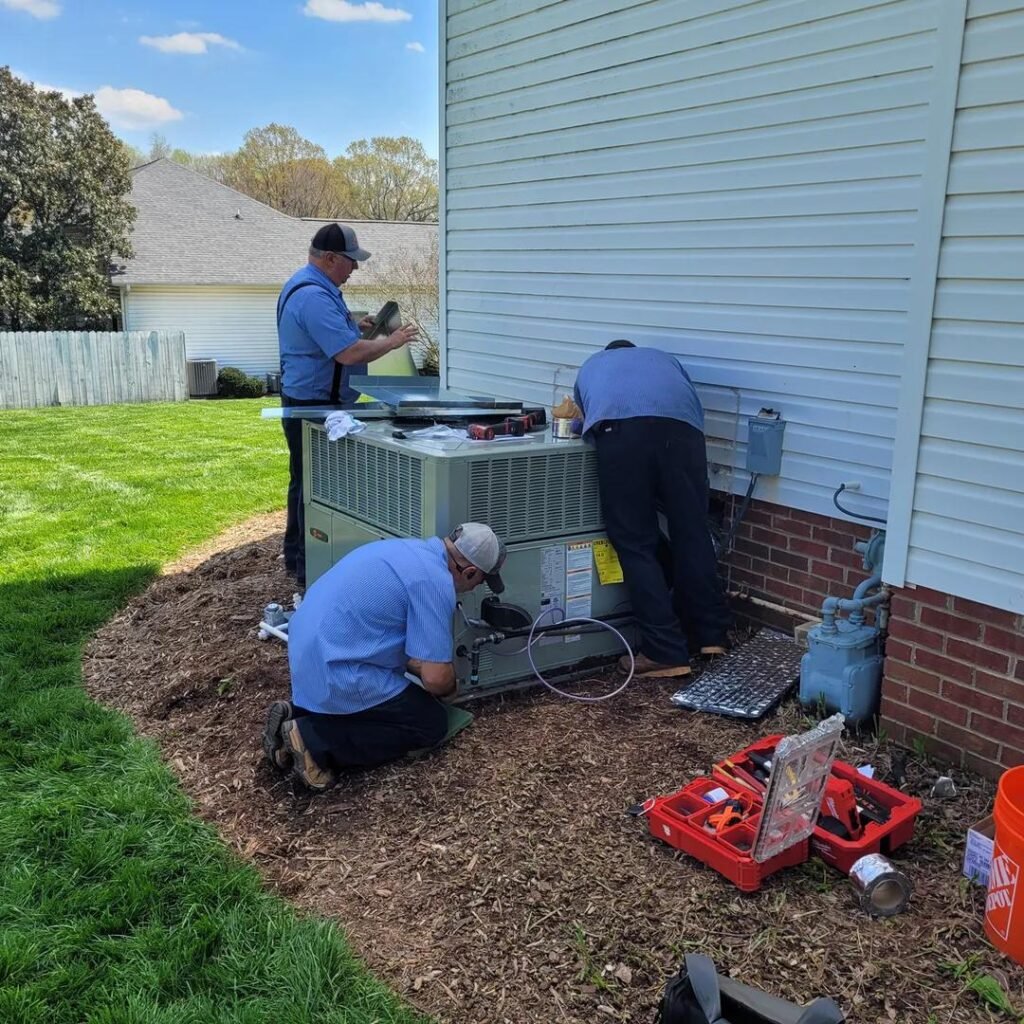
A 1980s house on a small lot constrains the work in ways a new subdivision does not: the outdoor unit sits close to the property line, the air handler is often in a crawlspace or a tight closet, and the duct system was designed for a smaller floor plan than the house now has. We work in those spaces and we measure before we recommend, because the difference between a compressor that is failing and a coil that is restricted is not visible from the driveway. We also tell you when a repair is not worth doing on a unit that has already had two. HVAC Durham NC works on the equipment this town was actually built with, and on the access problems that came with it.
Why this winter, in Carrboro
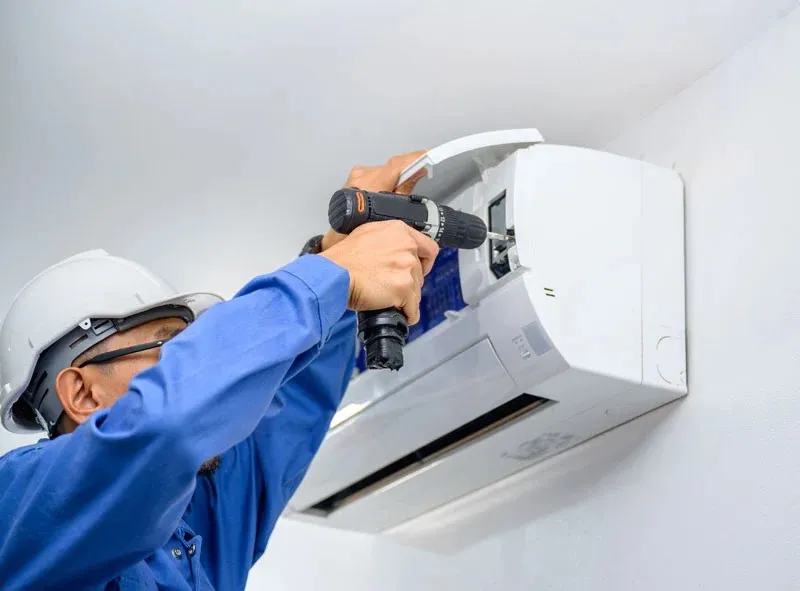
The timing case in Carrboro is the strongest in this group, and it comes straight from the housing age. Nearly 44 percent of the town went up in the 1980s and 1990s, which means a large share of the original heat pumps are between roughly 27 and 46 years old. A heat pump that has reached that age does not fail politely in the shoulder season. It fails on the first night the temperature drops far enough that the auxiliary heat cannot cover the difference, and by then the decision is being made in a cold house.
There is a second factor specific to a town this size and this age: rental turnover. A 1980s Carrboro house that has been rented for years often has a service history nobody can produce, and the equipment may have been repaired to keep it running rather than to fix it. A visit before winter establishes what is actually in the closet, what has been replaced and what has not, and whether the system is safe to run for another season. That is information a landlord and a tenant both need, and it is much easier to obtain in October than on a frozen morning.
Finally, the 1980s machines themselves set the timetable. A heat pump from that decade is at the age where a compressor replacement can exceed what the unit is worth, and where a defrost board can be unavailable. Waiting does not improve either situation; it only moves the decision to the coldest week of the year, when the alternative to a repair is a space heater and a queue.
Carrboro, North Carolina
Frequently
Asked
Questions
Does Carrboro's elevation affect a gas furnace?
At 494.5 feet, no. The USGS figure is for the Census place point and sits far below the 2,000-foot line where Rheem’s high-altitude instructions begin to require a 4 percent derate per thousand feet. A gas furnace in Carrboro is installed as a sea-level appliance, and altitude is not part of the diagnosis.
When were most Carrboro homes built?
The ACS 2019–2023 five-year estimate puts the median year built at 1986. 43.6 percent of the housing was built in the 1980s and 1990s — 27.4 percent in the 1980s alone — 33.5 percent predates 1980, and 22.9 percent was built in 2000 or later. The 1980s wave is where most replacement decisions sit.
How do most Carrboro homes heat?
Electricity is the primary fuel in 5,739 occupied units, or 61.0 percent, and utility gas in 3,512, or 37.3 percent, per the ACS 2019–2023 five-year estimates. Electricity is a fuel, not a heat pump, so the electric share includes heat pumps, heat strips and older resistance systems, and dual-fuel homes are counted once.
Which county and utility apply to a Carrboro address?
Carrboro is entirely within the county of Orange, with no part of the town in a second county, so one building department and one inspection schedule apply. The utility is address-specific: check the provider named on your bill before relying on any rebate.
How long does an HVAC system last in North Carolina?
A residential heat pump is usually expected to run 15 to 20 years. With a median build year of 1986 and 43.6 percent of the housing from the 1980s and 1990s, a large share of Carrboro’s original equipment is past that band, and some of it has never been replaced.
What should I do if the heat stops on a cold night in Carrboro?
If you smell gas, leave the house and call your gas utility before anyone works on the furnace. If the house is safe, turn the thermostat off, check the breaker and the filter, and call (984) 230-5554. Tell us the year the house was built and whether the outdoor unit has ever been replaced, and we will tell you what to check while you wait.