
HVAC in Apex, NC
Talk to a person
(984) 230-5554
Apex, Wake County
Piedmont, North Carolina
Furnaces and heat pumps
Repairs, replacements, maintenance
When the furnace runs and the house stays cold
Apex filled in fast. Two thirds of the houses in town went up after 2000, which means a large share of the furnaces and air conditioners here are the ones the builder installed, now close to the end of their working life. The failure that brings most people to this page is specific: a house from the boom years, a January morning when the furnace runs but the rooms upstairs never catch up, and a thermostat that says the system is doing its job. Apex HVAC calls usually start there.
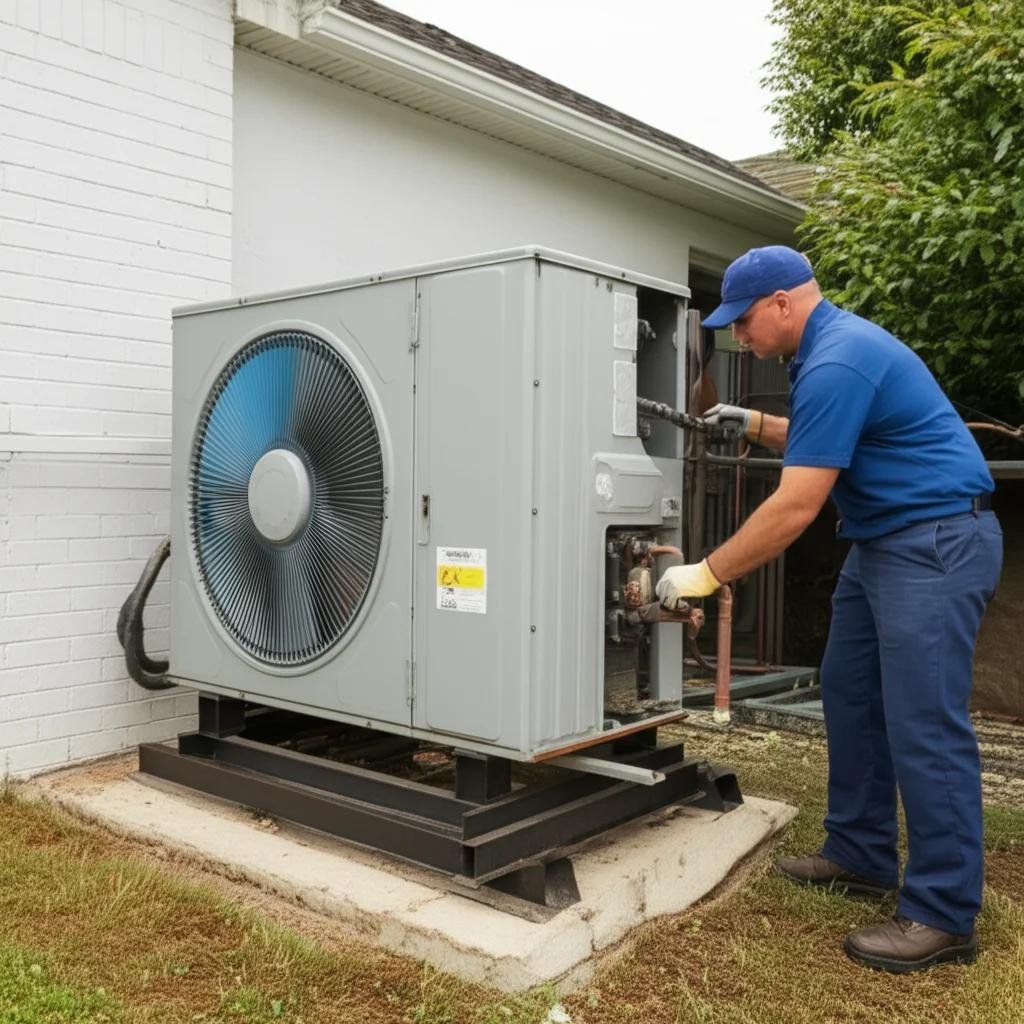
Homes in Apex: the local picture
Apex is a Wake County town of roughly 25,000 housing units, most of them built in a single long construction wave. Four facts do most of the explaining.
357 feet, and what the elevation does not change
The USGS 3D Elevation Program returns 357.5 feet at the point the Census Bureau uses to locate Apex. That number matters less here than it would in a mountain market, and the reason is documented: Rheem’s high-altitude kit instructions state that elevations above 2,000 feet require a gas furnace to be derated by 4 percent per thousand feet, with an orifice change where the gas heating value calls for it. Apex sits more than 1,600 feet below that line, so the derating question that shapes furnace selection in the Rockies does not apply to a house on this side of the Wake County line. Elevation is still worth knowing, because it fixes the town in the Piedmont rather than the mountains, but it is not the variable that decides how your system behaves in February.
A town built between 2000 and 2019
The Census Bureau’s ACS 2019–2023 five-year estimates put the median year built in Apex at 2007. The distribution behind that median is the useful part: 66.5 percent of the town’s housing went up in 2000 or later, 29.3 percent in the 1980s and 1990s, and only 4.3 percent before 1980. What that produces is a town with very little legacy housing and a great deal of first-generation equipment. A house finished in 2007 is now at the age where the original furnace and condenser have either been replaced or are about to be. The 1990s third of town is usually on its second system already, which changes the conversation from repair to what the last installer chose.
How Apex heats: gas first, electricity second
Of the 23,873 occupied homes in Apex, 14,982 — 62.8 percent — use utility gas as their primary heating fuel, and 8,493 — 35.6 percent — use electricity. Those ACS 2019–2023 figures describe the primary fuel of each occupied unit, so a dual-fuel system counts once, and they lag the current housing market by roughly two years. The third caveat is the one that matters most on a service call: electricity is a fuel category, not a heat pump. A house in the electric share may have a heat pump, resistance baseboards, or a heat strip in an air handler, and the only way to know which is to read the equipment. In practice, gas furnace plus central air is the default system across the newer half of Apex.
Who serves an Apex address
Apex sits in Wake County: the Census place-by-county geography puts 100 percent of the town’s population there, with a sliver reaching into Chatham County. The town’s 25,148 housing units are spread across that line, which matters for permits and inspections before it matters for anything else, because the county that issues the mechanical permit is the county the address sits in. Utility territory is a different question, and one this page will not guess at: rebate eligibility and the gas or electric provider depend on which utility serves your specific address, so the bill in your hand is the authority, not a map. If an incentive is part of your decision, check the provider named on the bill before you choose equipment, and read the programme’s own eligibility rules rather than a summary of them.
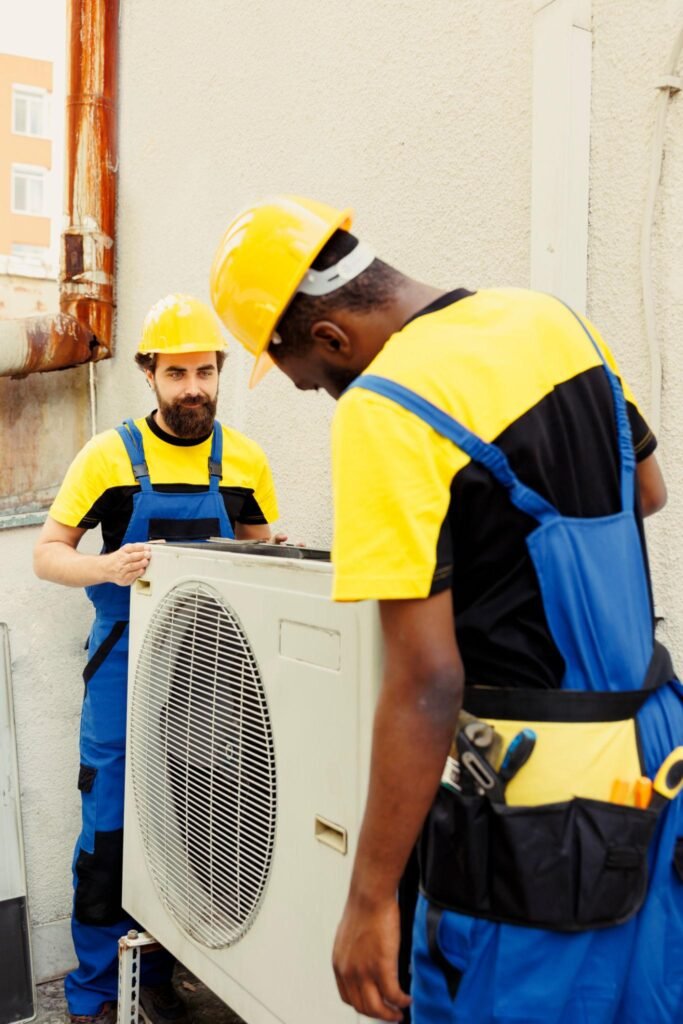
Heating and cooling services in Apex
The work in Apex clusters around the town’s build era. Gas furnace repair is the most common heating call, because the gas share is the majority and because a furnace that was installed in 2007 is now old enough to fail at the ignition, the inducer, or the heat exchanger rather than at something simple. For the electric third of town, the same call is usually a heat pump problem, and the diagnostic path is different: reversing valve, defrost board, auxiliary heat, and the outdoor unit’s charge. Furnace repair in Durham covers the gas side in detail, and heating installation covers what a replacement involves when the cabinet is too far gone.
Cooling is the other half of the same houses. A 2000s subdivision in Apex was typically built with one condenser per floor or one oversized single system, and the second-floor complaints that follow are usually airflow rather than refrigerant. AC installation explains how a replacement is sized and what the ductwork has to prove first, while AC maintenance is the annual work that keeps a 2007 condenser from failing in July. Water heaters age on the same clock as the rest of the house, so water heater repair and the wider AC services in Durham round out what we are called for. Where a house has both a furnace and a heat pump, the two have to be looked at together, because the changeover setting decides which one you are paying to run.
We work across Apex and the neighbouring towns, including Cary, Morrisville, Holly Springs, Chapel Hill and Raleigh.
The 1990s third of town is a different job. Those houses are on their second or third system, and the equipment rarely matches street to street the way the 2007 stock does, so the diagnosis has to start from what is actually in the closet rather than from a model number. That is also where we find the mismatched replacements — a furnace sized for the original house still feeding a duct system that was never touched — and the answer there is airflow work before another box is sold.
Next step
What a service visit covers
A visit starts with the house, not the equipment list. The first readings tell us whether the problem is the furnace, the ductwork, or the way the house is being operated.
The first hour
- The thermostat's settings and location are checked against the rooms that stay cold.
- Filter, return air and static pressure are measured before any part is discussed.
- On a gas furnace, combustion, draft and temperature rise are read at the unit.
- On a heat pump, defrost, auxiliary heat and outdoor charge are checked in sequence.
- The fault code history is read, because a cleared code usually returns.
What you leave with
- The readings written down, so the next visit starts from data rather than memory.
- A clear statement of what failed and what did not.
- The repair options ranked by what the readings support.
- A straight answer on whether the cabinet is worth another repair.
- The next step in writing, including what to watch before the heating season.
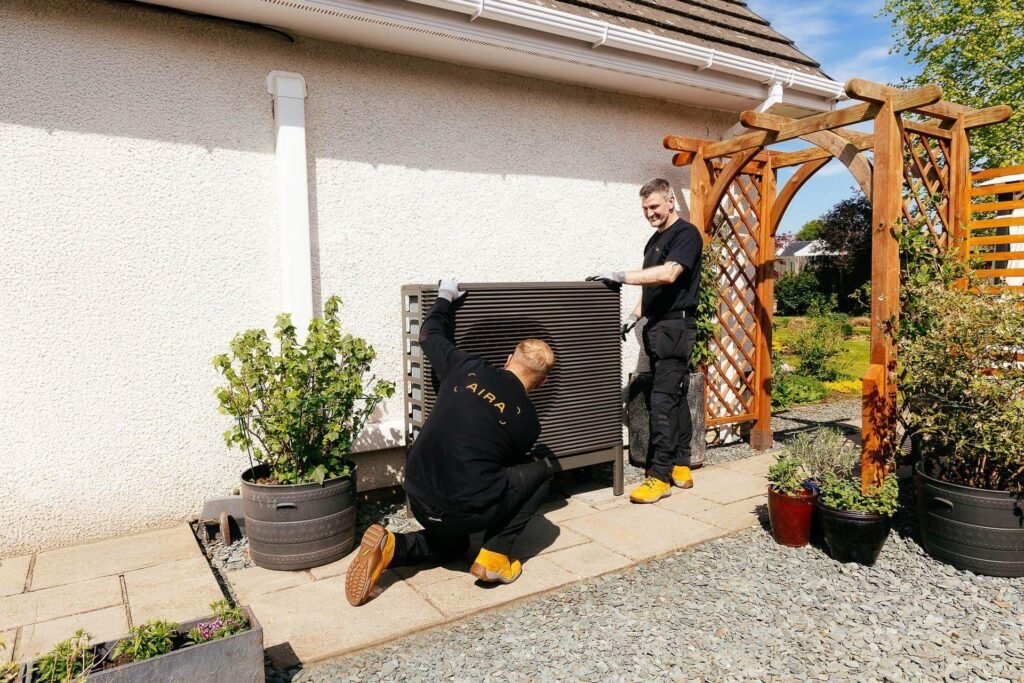
Why homeowners in Apex work with us
Most of the equipment we see in Apex was installed by a production builder, which means the same model number appears on the same street a dozen times. That is useful. It means we can tell you what usually fails first on that unit, what the parts situation looks like, and whether the manufacturer’s own service history on that model points to a repair or a replacement. We read combustion on gas furnaces and static pressure on every system, and we say when a 2007 furnace is finished rather than proposing a repair that buys one more winter. HVAC Durham NC works on the equipment this town actually has, in the houses this town actually built, and that is a narrower brief than it sounds.
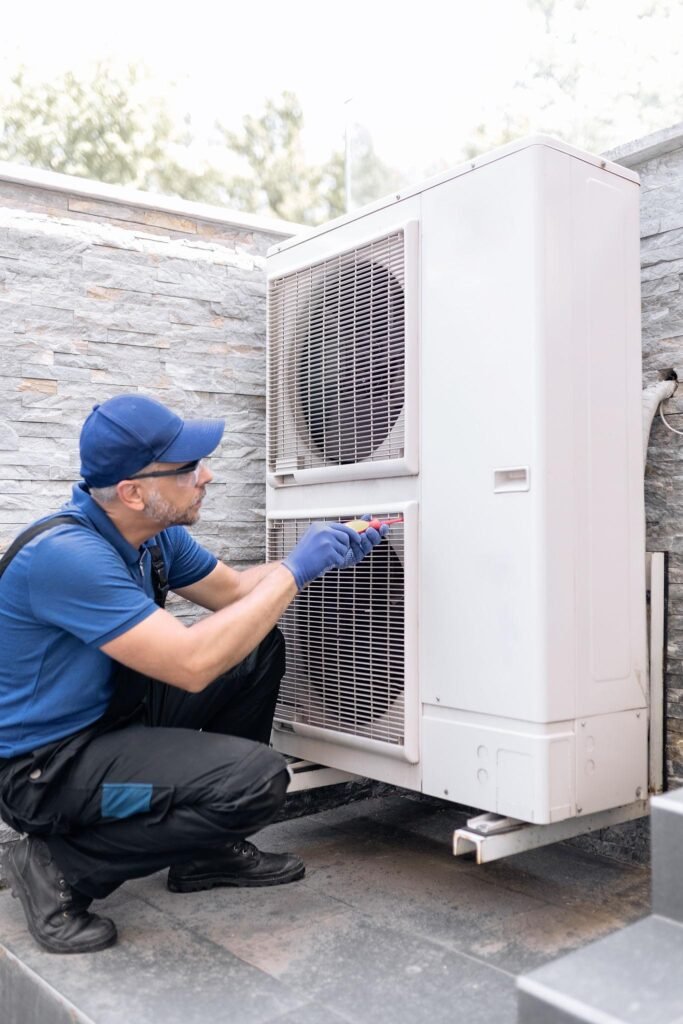
Why this winter, in Apex
Timing in Apex is set by the housing stock, not by the forecast. A town with a median build year of 2007 and 66.5 percent of its housing finished in 2000 or later is a town whose original heating equipment is arriving at the end of its service life all at once. The first wave — houses finished between 2000 and 2010 — is the one that fails now, and it fails in the order the equipment was installed: furnaces first, then condensers, then water heaters.
That matters in January for a reason that has nothing to do with weather drama. When a furnace dies in the first cold week, the decision is made under pressure, in a house with children or a parent at home, and the option that gets chosen is whichever one can be installed soonest. A house that was looked at in October gets a different decision: the failed part is identified while the system is still running, the replacement is scheduled, and the work is done without a space heater in the hallway. The same repair, measured in time rather than money, takes less of both in the shoulder season. Apex’s build era makes that window predictable, which is the only advantage this town’s homeowners have over the next one.
Apex, North Carolina
Frequently
Asked
Questions
Does Apex's elevation affect a gas furnace?
At 357.5 feet, no. The USGS figure is for the point the Census Bureau uses to locate the town, and it sits well below the 2,000-foot line at which Rheem’s high-altitude instructions call for a 4 percent derate per thousand feet. Altitude is not what is wrong with a furnace in Apex; the fault code, the gas pressure and the airflow are.
When were most Apex homes built?
The ACS 2019–2023 five-year estimate puts the median year built at 2007. Two thirds of the housing — 66.5 percent — went up in 2000 or later, 29.3 percent in the 1980s and 1990s, and 4.3 percent before 1980. The practical result is a town where the first replacement cycle for heating equipment is happening now.
How do most Apex homes heat?
Utility gas is the primary fuel in 14,982 occupied units, or 62.8 percent, and electricity in 8,493, or 35.6 percent, according to the ACS 2019–2023 five-year estimates. Electricity is a fuel category, not a heat pump, and dual-fuel homes are counted once, so the equipment in the electric share has to be identified at the unit.
Which county and utility apply to an Apex address?
Apex is in Wake County, with a small part of the town reaching into Chatham County. Utility territory is address-specific: the provider named on your gas or electric bill is the one that governs service and any rebate you might qualify for, so check the bill before you plan around an incentive.
How long does an HVAC system last in North Carolina?
The usual service life for a residential furnace or condenser is 15 to 20 years, which puts the 2000–2010 Apex build wave squarely in the replacement window now. Age alone does not condemn a system; the condition of the heat exchanger, the parts situation and the number of repairs already made are what decide it.
What should I do if the heat stops on a cold night in Apex?
If you smell gas, leave the house and call your gas utility before anyone touches the furnace. If the house is safe but cold, turn the thermostat off, check the breaker and the filter, and call (984) 230-5554. Tell us the year the house was built and what the thermostat says, and we will tell you what to check while you wait.