
HVAC in Research Triangle Park, NC
Talk to a person
(984) 230-5554
Research Triangle Park
Durham County, North Carolina
Homes around the Park
Repairs, replacements, maintenance
A research district, not a neighbourhood
Research Triangle Park is not a town, and a page about heating it has to start there. The Park is a research and employment district spread across Durham County, with no municipality, no residential grid and no housing stock of its own. The Census tract that covers it reports zero housing units. That does not make the place irrelevant to a heating and cooling company; it makes it a different kind of address. The calls we take around RTP come from the homes on its edges and from the people who spend their days inside it, and this page states which facts exist for the district and which do not.
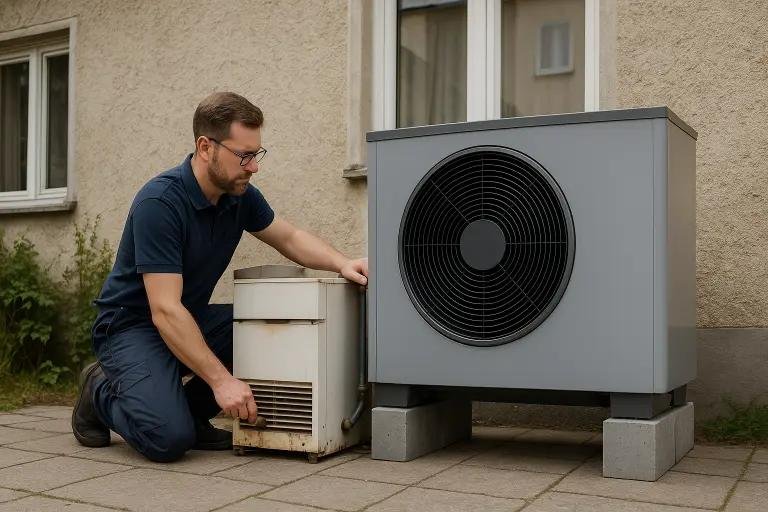
Homes around Research Triangle Park: the local picture
RTP has no housing of its own, so the local picture has to be drawn from the district’s geography and from the residential streets that surround it.
346 feet, and what the elevation does not change
The USGS 3D Elevation Program returns 345.7 feet at the point used to locate Research Triangle Park. That is Piedmont elevation, and it sits far below the height at which gas equipment is treated differently: Rheem’s high-altitude instructions call for a 4 percent derate per thousand feet only above 2,000 feet, with an orifice change where the gas heating value requires it. The Park is more than 1,600 feet under that line. Nothing inside the district is derated for altitude, and neither is any house on the residential streets around it. The number is a locator, not a diagnosis: it tells you the Park sits on the same Piedmont ground as Durham and Morrisville, and that altitude is not part of any heating question here.
A district with no housing stock to describe
This is the fact that makes RTP different from every other page in this set. The Census tract covering the Park — tract 9801 in Durham County — reports a total of zero housing units in the ACS 2019–2023 five-year estimates, and no median year built, because there is no housing to date. That is not a gap in the data; it is the data. The Park is zoned and built for research, offices and light industry, and it has no residential neighbourhoods inside its boundary. The consequence for a heating page is simple: there is no RTP housing stock to describe, and any sentence about when the Park’s homes were built would be invented. The homes we actually serve are on the surrounding streets.
How the addresses around the Park heat
Because the district itself has no occupied housing, the Census publishes no residential heating-fuel mix for it: tract 9801 reports zero occupied units in every fuel category of table B25040. There is no honest way to write “how RTP heats” as a residential statement, and this page will not borrow another city’s numbers to fill the space. What can be said is directional and sourced: the housing that surrounds the Park sits in Durham, Wake and Orange counties, in cities whose own fuel mixes differ sharply — gas-dominant in the Wake County suburbs, electric-dominant in Durham and Carrboro. A house five minutes from the Park gate can be either. The equipment, not the postcode, is what decides, and the equipment is read at the unit.
Who serves a Research Triangle Park address
The Park is in Durham County. Three points sampled inside the district — at its centre, its southern edge and its northern edge — all return Durham County through the Census geocoder, and the tract that covers it is a Durham County tract. There is no city government to issue a permit, because there is no city; the county is the authority that matters. Utility territory is a separate question and one this page will not guess at: the gas or electric provider, and any rebate eligibility that follows from it, depends on the specific address rather than the district. The bill in your hand is the authority, whether the address is an office on the Park or a house on the road outside it.
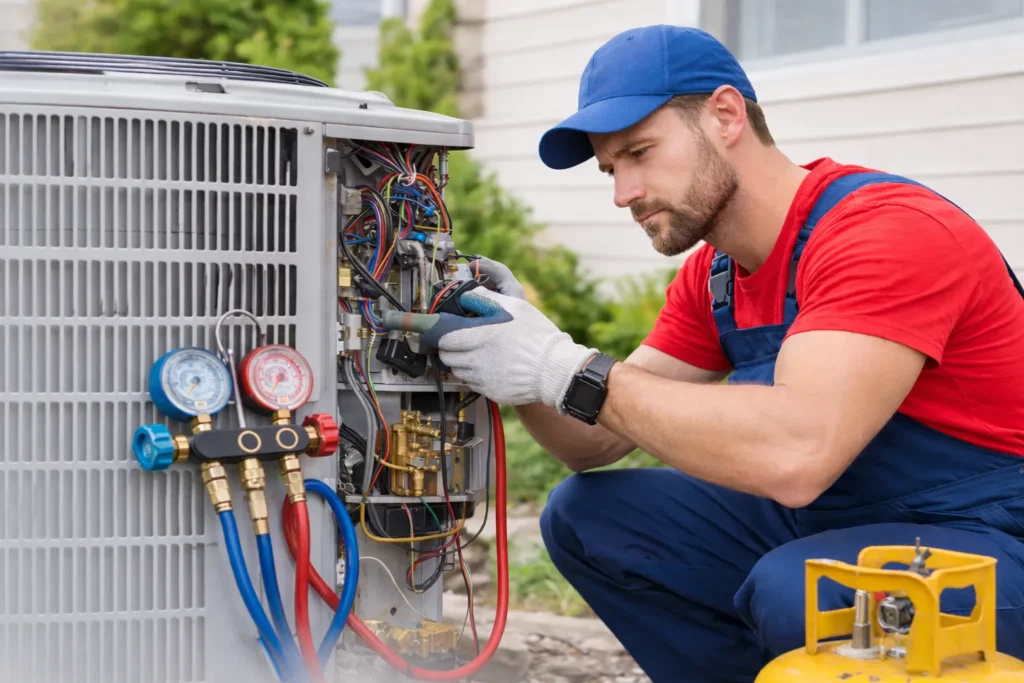
Heating and cooling services for the Park and its neighbours
The work around the Park is residential work on the streets that surround it, because the district itself is not housing. That means the service list is the same one that applies to Durham, Morrisville, Cary and Chapel Hill, and the age of the house decides which part of it applies. Heating repair in Durham covers heat pumps and air handlers, furnace repair in Durham covers gas furnaces, and heating installation sets out what a replacement has to establish before equipment is chosen.
Cooling follows the same equipment in most of these houses, so AC services in Durham and AC maintenance are the summer half of the relationship. Water heaters are on their own clock, and water heater repair is the call when a tank starts to leak. If you are buying or renting around the Park and want to know what the equipment is before you commit, that is a conversation we have often, because the housing here changes hands quickly and a pre-purchase look at the mechanical side is a smaller problem than discovering it in January.
We work around Research Triangle Park and in the cities that surround it, including Durham, Morrisville, Cary, Chapel Hill and Apex. The district has no residential streets, so every one of those calls is to a house in one of those cities, on a road that happens to be a few minutes from a Park entrance.
Next step
What a service visit covers
A visit near the Park is a normal residential visit, with one difference: the address may be closer to an office park than to a subdivision, and the equipment may not match the neighbours’. The readings still decide the answer.
The first hour
- The thermostat is checked against the rooms that stay coldest.
- Filter, return air and static pressure are measured at the air handler.
- On a heat pump, defrost, reversing valve, charge and auxiliary heat are checked in order.
- On a gas furnace, combustion, draft and temperature rise are read at the unit.
- The equipment's model and serial plates are read, because the house's age is not the system's age.
What you leave with
- The readings written down, so the next visit starts from data.
- A clear statement of which component failed and which did not.
- An honest answer on whether the cabinet is worth another repair.
- The repair options ranked by what the measurements support.
- The next step in writing, including what to watch before the cold returns.
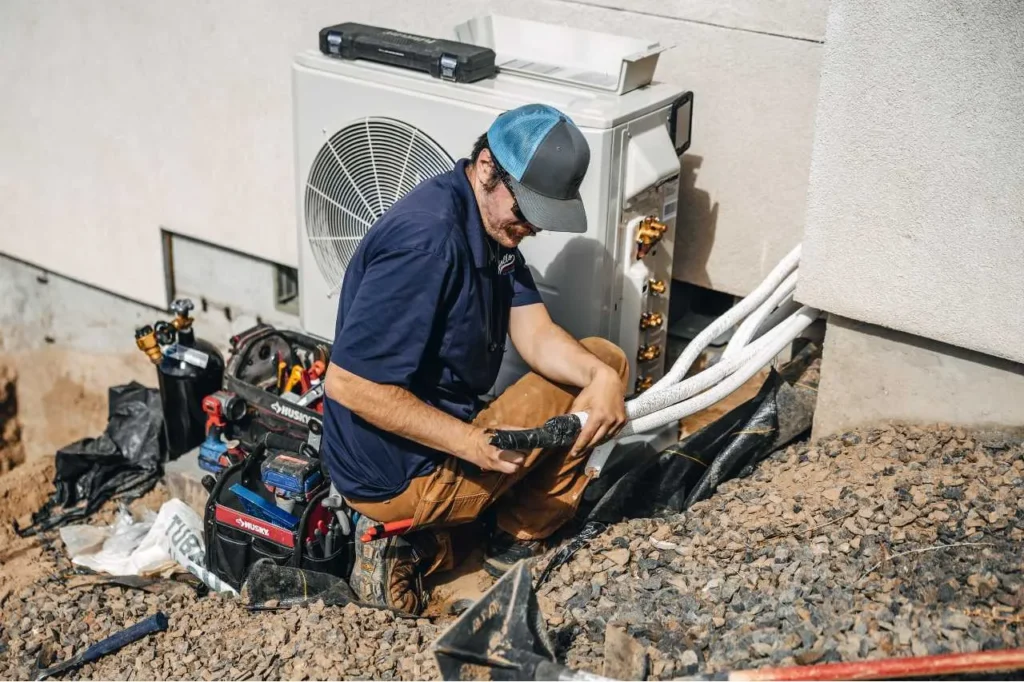
Why homeowners around the Park work with us
The housing around Research Triangle Park does not have a single character. A street off the Park’s western edge may be 1960s Durham stock; a new townhouse five minutes east may be from 2018. That mix is the reason we read the equipment rather than the neighbourhood, and the reason we ask for the model plate before we discuss options. We measure static pressure and combustion, we say when a repair is the wrong answer, and we do not treat a house as new because the address is near a research campus. HVAC Durham NC works on the homes that surround the Park, whatever decade they were built in, and the visit is the same whether the house is inside the loop or outside it.
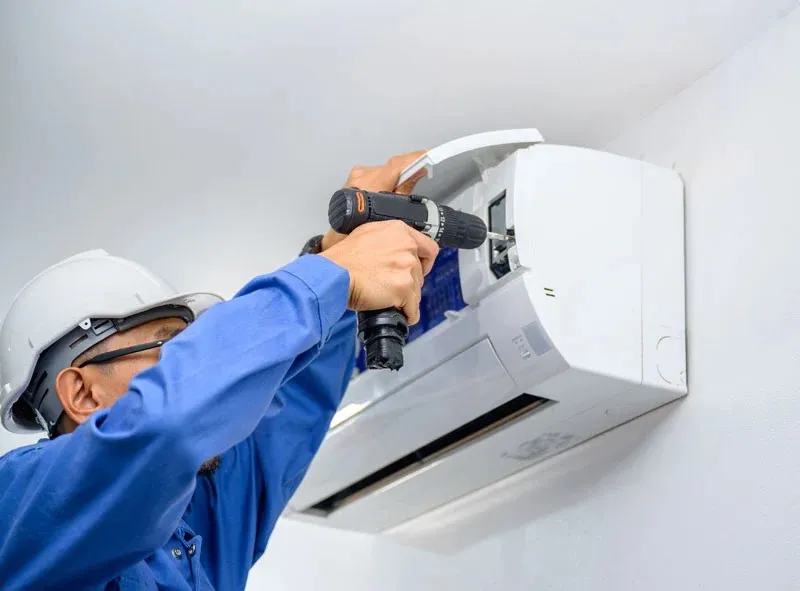
Why this winter, around Research Triangle Park
Timing around the Park is set by the housing on its edges, because the district itself has none. Those surrounding streets span the full range: older Durham stock that is on its third system, 1990s and 2000s subdivisions that are on their second, and new construction that is still on its first. Three different clocks run within a few minutes of the same gate, and the same cold week arrives for all of them.
What makes that worth planning is the shape of the working day here. The Park employs people who commute in from every direction, and a heating failure at home is discovered in the evening, after the commute, when the house is cold and the decision has to be made quickly. A house that was looked at in October does not produce that evening. The equipment around the Park is not unusual; the timing of the call is, because so many of the households here notice a problem at the end of a working day rather than in the middle of one.
That also changes what we ask on the phone. A caller at seven in the evening is usually reporting a symptom rather than a diagnosis, so the first questions are about the thermostat, the breaker and whether the outdoor unit is running, and the answers decide whether the visit can wait until morning or cannot.
There is also a practical point about the district’s boundary. Because the Park has no housing, every residential call is technically outside it, in Durham, Wake or the county of Orange, and the county line can fall between two streets that look identical. Knowing which county a house is in decides the permit path on a replacement, and it is worth settling before the equipment is ordered rather than after.
Research Triangle Park, North Carolina
Frequently
Asked
Questions
Does Research Triangle Park's elevation affect a gas furnace?
At 345.7 feet, no. The USGS figure sits more than 1,600 feet below the 2,000-foot line where Rheem’s high-altitude instructions begin to require a 4 percent derate per thousand feet. A furnace in or around the Park is installed as a sea-level appliance, and altitude is not part of the diagnosis.
Is there housing inside Research Triangle Park?
No. The Census tract covering the Park, tract 9801 in Durham County, reports zero housing units in the ACS 2019–2023 five-year estimates. The district is built for research, offices and light industry, not housing, so the homes we serve are on the residential streets around its boundary.
Which county and utility apply to an address in the Park?
The Park is in Durham County. Three points sampled inside the district all return Durham County through the Census geocoder, and there is no city government to issue a mechanical permit because there is no city. The utility is address-specific: check the provider named on your bill before relying on any rebate, whether the address is an office on the Park or a house on the road outside it.
Why does this page give no median year built for the Park?
Because the Census publishes none: with zero housing units in the tract, there is no median year built and no residential fuel mix to report. Using a neighbouring city’s figures as if they described the Park would be inventing a fact, so this page states the gap instead of filling it, and points to the city pages that do carry sourced numbers.
How long does an HVAC system last in North Carolina?
A residential furnace or heat pump is usually expected to run 15 to 20 years. The housing around the Park spans that entire range, from 1960s Durham stock on a third system to new construction on its first, so the equipment’s age is the only useful guide to what a house needs — and the house’s age is only a hint.
What should I do if the heat stops on a cold night near the Park?
If you smell gas, leave the house and call your gas utility before anyone works on the furnace. If the house is safe, turn the thermostat off, check the breaker and the filter, and call (984) 230-5554. Tell us the age of the house and what the thermostat says, and we will tell you what to check while you wait.