
Furnace Installation & Replacement in Durham, NC
A furnace replacement looks like a straight swap until the venting is opened up. In Durham's older neighborhoods the existing flue often cannot take the high-efficiency unit that was quoted, the closet has no condensate path, and the duct system was sized for a furnace that was removed decades ago. Furnace installation in Durham is mostly a venting and airflow decision that happens to include a furnace. This page explains what to check before a unit is ordered.
Why Homeowners in Durham Choose Us for Furnace Installation
The equipment is the easy part. What decides whether a replacement heats evenly and lasts is the venting, the gas supply, the duct static pressure, and the closet it sits in, and those are the things we measure before quoting. HVAC Durham NC installs gas furnaces, electric furnaces, heat pump systems, and dual-fuel combinations across Durham, and we will tell you when a repair keeps an existing unit running for years rather than selling a changeout that the house does not need.
Venting Checked First
Flue material, chase condition, and whether a condensing unit can actually be vented and drained from where the furnace sits.
Duct System Measured
Static pressure and temperature rise checked, because a new furnace on an undersized duct system disappoints every time.
Why This Can't Wait in Durham
Furnace replacement decisions cluster in the cold months because that is when the old unit stops. NCEI’s 1991-2020 normals for the RDU station put the January normal low at 31.8F, and most of the year’s 3,153 heating degree days fall between November and February. A unit that is limping in October is a no-heat emergency in January, and a January emergency is the worst time to be choosing venting and efficiency under pressure.
The fuel mix here also shapes the choice. Census estimates for the City of Durham show electricity as the primary heating fuel in about 59.9 percent of occupied homes and utility gas in about 37.7 percent, which is why a furnace replacement question in Durham is often really a heat pump question. Natural gas reaches Durham through Enbridge Gas North Carolina, the utility formerly known as PSNC, so gas remains a real option where the service already exists. Homes on propane are a smaller share again, and a conversion to gas is a separate project with its own trench, meter, and permit work.
There is a scheduling point behind this. A planned changeout can be surveyed, permitted, and booked around the weather and your week. A January failure cannot, and the replacement then gets whatever equipment is available and whatever vent route can be made to work that day.
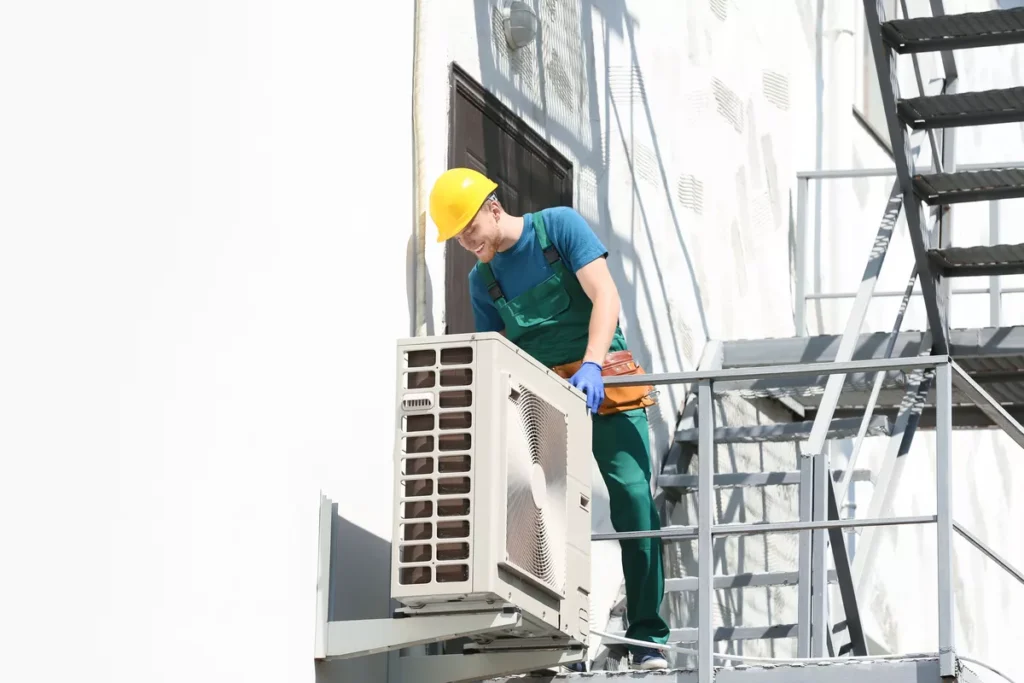
OUR FURNACE INSTALLATION IN DURHAM
What Backs Our Furnace Installation Work
Gas Furnaces and the Vent Path
The vent path decides which furnace you can install, and it is the check most often skipped in a quote. Four points cover it. An 80 percent furnace vents into a metal flue and depends on a chimney or chase that is intact and correctly sized. A 90 percent condensing furnace vents in PVC and produces condensate, which needs a drain route and freeze protection. A masonry chimney that has been relined or abandoned changes what is legal to connect. A flue that runs through an unheated space can back-draft a single-wall connection. In an older Durham house the vent path frequently decides the efficiency tier, and the honest conversation happens before the order rather than after the crate is open.
Heat Pump Versus Furnace in Durham
Because most Durham homes heat with electricity, a heat pump is often the real alternative to another furnace, and the comparison has four practical parts. A heat pump moves heat rather than burning fuel, so it can heat efficiently well into cold weather and also cools in summer. Output falls as the outdoor temperature drops, and the system then relies on auxiliary heat, which is expensive to run if the balance point is set badly. A gas furnace delivers strong heat regardless of outdoor temperature, which matters on the coldest nights. A dual-fuel system pairs the two and switches automatically. The right answer depends on the existing fuel, the duct system, and how the house is actually used through a Piedmont winter.
Sizing, Static Pressure and Ducts
A correctly sized furnace on a duct system that cannot move the air is a failed installation, and static pressure is how you find out before the invoice. Four points matter. The heat load calculation sizes the unit to the house rather than to the old furnace’s label. Static pressure measures how hard the blower has to work to push air through the ducts. Temperature rise across the exchanger confirms the airflow is in the manufacturer’s range. Return capacity and filter sizing decide whether the system can breathe. When static pressure is high, the fix is duct work rather than a bigger blower, and a replacement that ignores it will produce hot and cold rooms and a short-lived blower motor.
The Mechanical Permit
A furnace changeout is a permitted mechanical job in Durham, and the permit is part of a correct installation rather than paperwork after it. Four points define the process. Durham’s City-County Building & Safety department states that mechanical permits are required when installing or upgrading heating, air conditioning, and ventilation systems. The department handles permits, plan review, and inspections for both the city and the county. The inspection checks the installation, the venting, and the clearances against the code the work was permitted under. The paperwork belongs with the house records for resale. Scheduling the inspection into the job keeps the replacement from stalling at the end, and it is the reason a quote should say who is pulling the permit and when.
Gas Furnace Replacement
Changeouts planned around the vent path, gas supply, and closet rather than around the crate.
- 80% and 90% options
- Vent path assessment
- Gas line sizing
- Closet clearances
Electric Furnace Replacement
Elements, sequencers, and circuit capacity checked before a like-for-like swap.
- Circuit capacity
- Element sizing
- Sequencer setup
- Disconnect checks
Heat Pump Installation
A heat pump where the duct system and the house support it, with the balance point set properly.
- Load calculation
- Balance point setup
- Aux heat control
- Defrost checks
Dual-Fuel Systems
A furnace and heat pump paired so the switchover happens at the right temperature.
- Changeover settings
- Control wiring
- Fuel comparison
- Setback planning
Duct and Airflow Corrections
Static pressure and return capacity addressed so the new unit can actually deliver its rated airflow.
- Static pressure test
- Return sizing
- Filter grille sizing
- Register balance
Permits and Inspection
The mechanical permit and inspection handled as part of the installation, not after it.
- Permit scope
- Inspection scheduling
- Code clearances
- Records for resale
Our Furnace Installation Process
The measurements come before the equipment, every time.
The Furnace Scenario No One Else Covers
The most common surprise in a Durham furnace replacement is a quote for a high-efficiency unit in a house where the flue runs up an interior chase with no route to an outside wall. A condensing furnace needs a PVC vent that terminates outdoors with the correct clearance, and it needs a condensate drain that will not freeze. In a 1990s subdivision house with a furnace in a central closet and a flue sharing a chase with the water heater, that route may not exist without opening a wall.
We check it before the order, and we say plainly which efficiency tier the house can actually support. Sometimes that means an 80 percent furnace is the right answer and the higher-efficiency unit is not worth the wall work. Sometimes the chase can take a liner and a sidewall termination, and the condensing unit makes sense. Either way, the decision is made with the wall open on paper rather than discovered the morning of the install, when the old furnace is already on the truck and the crew is standing in the hallway.
Furnace Failed and It's Cold?
If you smell gas, leave the house and call your gas utility. Otherwise call (984) 230-5554 and we will tell you what to check at the thermostat and breaker while a replacement or repair is scheduled.
Local Furnace Installation Across the Triangle
HVAC Durham NC installs and replaces furnaces in Durham and across the surrounding Triangle, including Chapel Hill, Carrboro, Raleigh, Cary, Morrisville, Research Triangle Park, Apex, Holly Springs, and Hillsborough. Venting routes and duct systems vary block by block here, which is why the survey comes before the quote and why two houses on the same street can need different answers.
Frequently Asked Questions About Furnace Installation
The questions Durham homeowners ask before a furnace replacement is ordered.
Usually yes, and for reasons beyond efficiency. At that age the heat exchanger is the concern, parts availability gets worse every year, and a repair to a major component can approach the cost of a replacement. The honest test is the exchanger condition, the venting, and how many repairs have stacked up in the last few seasons, not the age on the label alone.
In most cases yes, by adding a cooling coil to the supply plenum and an outdoor unit, provided the duct system can move the extra air and the electrical service can support it. That is why we measure static pressure and return capacity first: a coil added to an undersized duct system cools poorly and stresses the blower.
The order that actually pays back is airflow first, then controls, then equipment. A clean filter, a duct system without restrictions, and a thermostat schedule do more than most people expect. After that, a properly sized unit and correct venting matter more than the efficiency badge, because an oversized furnace short-cycles and never reaches its rated performance.
A straightforward changeout on an existing vent and duct system is usually a single day. A job that needs a new vent route, a condensate path, or duct corrections takes longer, and the survey is what tells us which one you are getting. We would rather schedule honestly than promise a day and run into a wall, a chase that cannot be lined, or a return that has to be enlarged before the unit can move its rated airflow.
Yes. Durham's City-County Building & Safety department states that mechanical permits are required when installing or upgrading heating, air conditioning, and ventilation systems, and the department handles permits and inspections for both the city and the county. The permit should be part of the quote, not an afterthought.
If the AC is the same age as the furnace and the coil sits in the same cabinet, replacing both together usually makes sense because the labour is shared and the system is matched. If the AC is newer, a matched coil and a properly sized furnace can be installed on their own. The decision is about age and condition, not about convenience.