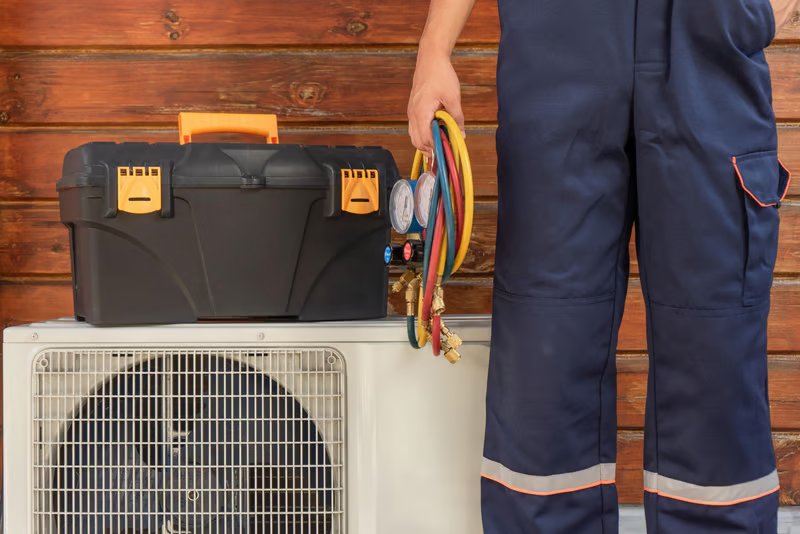
If your AC is blowing hot air instead of cold, it almost always comes down to one of seven problems and at least three of them you can check yourself in the next 10 minutes without calling anyone. The other four need a licensed HVAC technician, but knowing which category you’re in saves you time, money, and a service call fee.
Here’s the short answer: the most common reasons your air conditioner is blowing warm air are a dirty air filter, a refrigerant leak, a tripped circuit breaker, a misconfigured thermostat, frozen evaporator coils, a failing capacitor, or a compressor problem. We’ll walk through each one below starting with the ones you can fix yourself.

Durham summers are brutal. When your AC starts pushing warm air in July, you’re not just uncomfortable — you’re dealing with a real heat risk. Let’s figure out what’s going on.
Why Is My AC Blowing Hot Air? Start With These Checks
Before calling for ac repair in Durham, run through this list. Two of the most common causes of a home ac blowing warm air take less than five minutes to check and cost nothing to fix.
1. Your Thermostat Is Set to “Fan On” Instead of “Auto”
This is the most overlooked cause and the easiest fix. If your thermostat fan setting is switched to “ON” instead of “AUTO,” the blower runs continuously even when the system isn’t actively cooling. That means it pushes room-temperature air through your vents between cooling cycles, which feels warm.
What to check: Go to your thermostat. Find the fan setting. If it says “ON,” switch it to “AUTO.” Wait 5 minutes and check your vents again.
If that was it great. If the air is still warm, keep reading.
2. A Dirty or Clogged Air Filter
A severely clogged filter restricts airflow across the evaporator coil. When airflow drops too low, the coil can’t absorb heat properly and the system either blows warm air or shuts down on its safety switch entirely.
What to check: Pull your air filter. If it’s gray, packed with debris, and you can’t see light through it, replace it. Filters in Durham homes especially during pollen season, when the Triangle logs some of the highest pollen counts in the country can clog faster than the “replace every 90 days” recommendation suggests. If you have pets or allergies, check monthly.

3. Your Circuit Breaker Tripped — But Only on One Side
Central AC systems draw power from two separate breakers one for the outdoor condenser unit and one for the indoor air handler. If the outdoor breaker trips, your air handler keeps running and blowing air but with no compressor running outside, that air isn’t being cooled.
What to check: Go to your electrical panel. Find the HVAC breakers there are usually two labeled for the AC or air handler. If one is in the middle position (tripped), reset it fully off then back on. If it trips again within a few minutes, stop a recurring trip means an electrical fault that needs a technician.
4. Low Refrigerant or a Refrigerant Leak
Refrigerant is what actually moves heat out of your home. If your system is low on refrigerant almost always because of a leak, not because it “ran out” the air conditioner blowing warm air symptom shows up as air that’s slightly cool but never cold, or air that starts cold and gradually warms up as the system runs.
What to check: Look at the refrigerant lines running to your outdoor unit. If you see frost or ice buildup on the copper lines, that’s a refrigerant leak indicator. Also look for oily residue around the line connections refrigerant oil travels with leaking refrigerant.
This is not a DIY fix. EPA Section 608 requires a certified technician to handle refrigerants. A proper repair means finding and sealing the leak — not just recharging the system. If the leak isn’t fixed, you’ll be in the same situation by next summer. [“Emergency AC Repair in Durham, NC” | anchor: “when to call for emergency AC repair in Durham”]
5. Frozen Evaporator Coils
Counterintuitive but common: a frozen evaporator coil produces warm air at the vents because the ice blocks heat transfer entirely. Frozen coils are usually caused by a dirty filter (see #2 above), low refrigerant (see #4), or restricted airflow from closed or blocked vents.
What to check: Turn your system off completely not just to fan mode, all the way off and let it sit for 2–4 hours. Then check the indoor unit (usually in a closet or utility room) for ice or frost on the coil. If it was frozen, figure out why: check your filter first, then your vents. If you can’t find a clear cause, call for a diagnostic.
6. Capacitor Failure on the Outdoor Unit
The capacitor is a small electrical component that starts and runs the outdoor condenser fan motor and compressor. When it fails, the outdoor unit may hum but not fully operate meaning no heat is being removed from the refrigerant, so your ac unit blowing hot air continues no matter how long the system runs.
What to check: Walk outside and listen to your condenser unit when the AC is running. If you can hear the compressor humming but the fan isn’t spinning, or if the unit clicks and shuts off quickly, a failed capacitor is the likely cause. This is a technician fix capacitors store electrical charge and are dangerous to handle without training.
Capacitor failure is the single most common AC repair we see in Durham homes, particularly on systems 7–12 years old. The long NC summers put heavy load on these components year after year.
7. Compressor Problems
The compressor is the heart of your AC system. A failing or failed compressor means the refrigerant cycle stops entirely your system runs, air moves through the vents, but no cooling happens. Why is your air conditioner not cooling? If you’ve checked everything else on this list and nothing explains it, the compressor is the next conversation.
Compressor issues are the most expensive repair on this list — typically $800–$2,000+ — and on an older system, compressor failure is often the point where repair vs. replacement becomes the real question. [“AC Repair vs Replacement in Durham, NC” | anchor: “how to decide whether to repair or replace when your AC stops cooling”]
When to Stop Troubleshooting and Call a Durham HVAC Tech
Check the thermostat and filter yourself those are genuinely free fixes. After that, here’s when to stop and call:
- You see frost or ice on refrigerant lines → call, don’t wait
- Your outdoor unit is humming but not running → call
- You reset the breaker and it tripped again → call immediately
- Your system is making grinding, banging, or screeching sounds → shut it off and call
- Your home hasn’t cooled at all after 30+ minutes of runtime → call
If it’s a Durham heat advisory day and your ac is blowing warm air with family members who are vulnerable to heat, treat it as an emergency. [Emergency AC Repair in Durham, NC” | anchor: “how to get same-day emergency AC repair in Durham”]
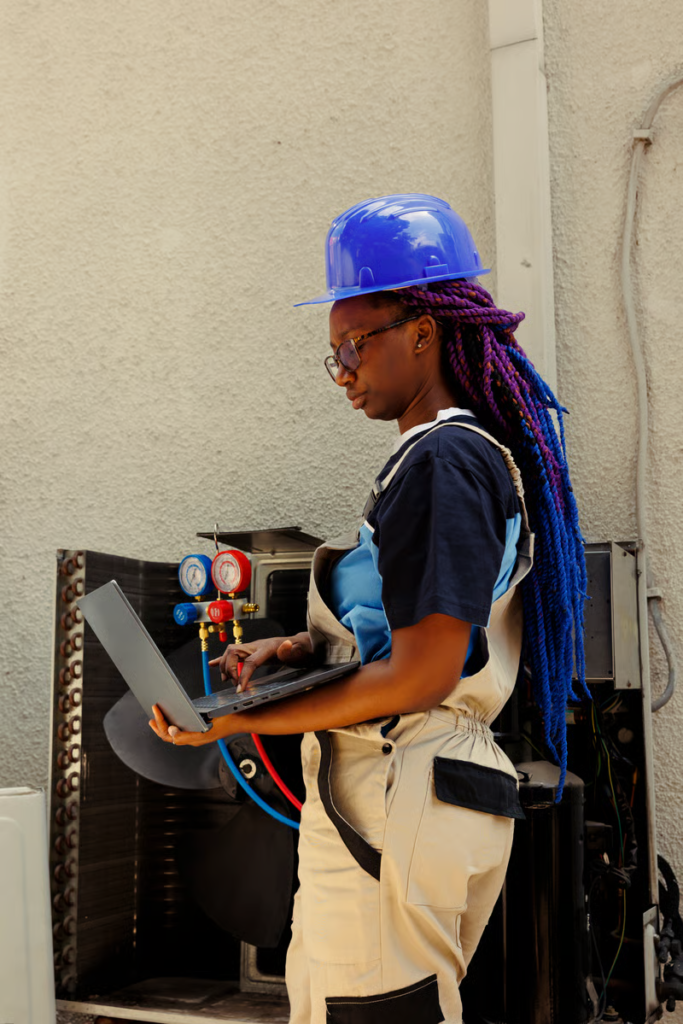
Frequently Asked Questions
Why is my air conditioner blowing warm air even though it’s running? The most common reasons are a thermostat set to “fan on” instead of “auto,” a clogged air filter, a tripped outdoor breaker, low refrigerant from a leak, frozen evaporator coils, or a failed capacitor. Start with the thermostat and filter both are free to check and fix yourself. If those aren’t the issue, you need a licensed HVAC technician to diagnose the rest.
Why is my AC not blowing cold air after I just had it serviced? If your AC was recently serviced and is already blowing warm air again, the most likely explanations are a refrigerant leak that wasn’t properly repaired (just recharged without fixing the source), a new component failure, or airflow restriction from a filter that clogged faster than expected. Call the company that serviced it if the repair was recent, ask about their warranty policy.
Why is my air conditioner not cooling my Durham home even on a mild day? On mild days, an AC that can’t keep up usually points to a refrigerant issue, dirty coils, or an undersized system rather than a simple component failure. Homes in older Durham neighborhoods sometimes have ductwork that’s undersized or leaking, which reduces cooling capacity regardless of how well the unit is functioning. A proper load calculation and duct inspection can identify this.
How much does it cost to fix an AC blowing warm air in Durham? It depends entirely on the cause. Thermostat and filter fixes cost nothing or a few dollars. A capacitor replacement runs $150–$350. A refrigerant leak repair runs $200–$1,500+ depending on where the leak is and how much refrigerant needs to be replaced. A compressor replacement runs $800–$2,000+. [“How Much Does AC Repair Cost in Durham, NC?” | anchor: “see the full AC repair cost breakdown for Durham homeowners”]
Get Your Durham AC Blowing Cold Again
If you’ve worked through this list and your AC is still pushing warm air, it’s time to call. Our licensed technicians serve Durham, Chapel Hill, Carrboro, Morrisville, Cary, Apex, Wake Forest, and Hillsborough — same-day service available.
Call now: [INSERT PHONE NUMBER]
For everything you need to know about finding a licensed HVAC contractor in Durham, pricing, and what to expect from a service call, read our complete guide. [ “AC Repair in Durham, NC: Complete 2026 Homeowner’s Guide” | anchor: “trusted AC repair service in Durham, NC”]